No Results Found
The page you requested could not be found. Try refining your search, or use the navigation above to locate the post.

The Centre for African Bio-Entrepreneurship (CABE) in collaboration with Open Society for Eastern Africa (OSIEA) hosted the national dialogue on livestock policy and practice in Kenya. The aim of the workshop was to share insights on critical policy on climate change, animal health, livestock markets and trade that affects Pastoralist areas of Kenya.
Read more Proceedings of national stakeholders forum on livestock policy and practice in Kenya
The 2nd Utafiti Sera forum on Youth Employment Creation in Agriculture and Agro-processing for inclusive
growth in Kenya was hosted at Westside Hotel in Kitale, Trans Nzoia County on March 1, 2018. This forum was
organized by the Centre for African Bio-Entrepreneurship(CABE) in collaboration with the Partnership for African
Social and Governance Research (PASGR).
Download here County forum report

An example of a water pan. Water pans are cost-efficient ways of storing water
SNV World, a Netherlands Development Organisation has rolled out a smart water solution technology in various counties to increase water storage facilities for farming. The project that has kicked off in Machakos County dubbed ‘smart water for agriculture’, targets small and medium entrepreneurial farmers to help them increase water productivity, income and save on labour.
According to SNV World, the water efficient technology entails construction of a water pan depending on the size of land and crops to grow. The water pans are of different designs either rectangular or square depending on county requirements. in putting up the water pan, some factors need to be considered such as evaporation rate, crop water requirements and method of water application, which varies across counties or regions.
Also, through the project, farmers can get guidance on the cost involved in developing a water pan. For instance, the initial capital expenditure for a water pan design to be implemented on a quarter piece of a farm, the farmer will spend between KES50,000-200,000 depending on the liner thickness and method of excavation.
Though the solution could be expensive for farmers, the water pans provide guaranteed storage capacity and are durable compared to storage or concrete tanks. Lastly, the organization has developed a water pan dimension application for different counties that they are working with. The application(app)available on google play for android phones, aids farmers to determine their water pan dimensions and evaluate the cost of constructing a water pan.
Recently, the national government and Meru County partnered in a plan to dig 600 water pans in arid and semi-arid areas to provide water for agriculture. The county plans to build 400 to address water shortage in Buuri, Tigania West, Tigania East, Igembe Central and Igembe North sub-counties.

By Mercy Nduati
Stakeholders pose for a photo during the WFE stakeholders dialogue forum in Kisumu.
In the month of May, the Women Foood Entrepreneurs (WFE) research project partners in Kenya organized a stakeholders dialogue forum in Kisumu to update the stakeholders on the research activities, progress so far, build stakeholder capacity and receive feedback. This forum provided an opportunity for the stakeholders to dialogue and exchange views on key aspects of this research project, challenges, new opportunities, and next steps.
The WFE is an international research project in Kenya and Burkina Faso aiming to strengthen women’s food entrepreneurship in city slums in Kenya & Burkina Faso by building inclusive business models for food security.
The project research team carried out the first household survey in the slums of Obunga and Nyalenda in Kisumu to better understand the interactions between soil, food, nutrition, entrepreneurship, and community. The baseline survey focused on the food production system among farmers and it was done between February and March 2017. The households were selected through a systematic random sampling by interviewing every 11th household from the starting point.
The study showed that ugali is the popular local diet accompanied by fish whilst rice and chapati are the most consumed carbohydrates. Three vegetables consumed twice in a week are kales, cowpeas, and blacknight shade. It was also evident that the households consume fewer fruits, fats and oils. Additionally, the study indicated that food availability and affordability shape the local urban food plate.
“Women Food Entrepreneurs in Kisumu desire to grow as food processors, producers and marketers though they face certain challenges like access to capital, low technology advancement and poor storage facilities,“ observed Ms. Eunice Likoko, a Ph.D. research student under WFE research project.
She adds that the farmers rely mostly on indigenous knowledge and they have not invested in improved technology tools that can help boost their agribusiness enterprises. Another challenge is gender disparity whereby most of the women in the city slums are involved in farming in each household. Many women are mostly survival entrepreneurs and not growth-oriented due to multiple gender-related socio-economic, cultural, and political barriers and constraints.
“In the next phase of the WFE project, we intend to focus on ways to link farmers to market opportunities and engage them in policy implementation in efforts to support agribusiness and create networks for future engagements, noted Ms. Likoko.
The baseline survey shows nearly half of the sampled urban population in Kisumu is engaged in agribusiness: farming (13%), fishmonger (10%), cooked food vendor (10%), and vegetable vendors (22%) (WFE, 2017).
Stakeholders from the Kenya Agricultural Research and Livestock Organization (KARLO) Horticulture Research and Kenya Industrial of Research and Development Institute (KIRDI) encouraged farmers to openly visit their offices if they need assistance on how to address agricultural challenges plus improve their nutrition and food security.
Giving his concluding remarks, CABE Executive Director, Dr. Hannington Odame challenged the young people to set up agribusiness incubation centers to create employment opportunities and solutions that can increase yields and encourage food diversity. He also called on the county government to subsidize the cost of fish feeds which are currently very expensive in order to encourage locals to engage in fish farming and also work together with research institutes like KARLO and KIRDI to introduce a solar heating system to prevent post-harvest losses.
On his part, Professor JB Okeyo from VIRED said,“The WFE project is the most achievable project as it has shown potential growth especially in the county of Kisumu. From the project, it is vital that farmers be enlightened about the importance of value addition plus access to markets to avoid post-harvest losses.”
He also mentioned that the next feedback meeting will be held In November this year.
The WFE research project is a four year programme funded by the Netherlands government at a tune of KES70m (U$700,000). It is a unique project involving research and capacity building among farmers and women entrepreneurs in the respective cities.
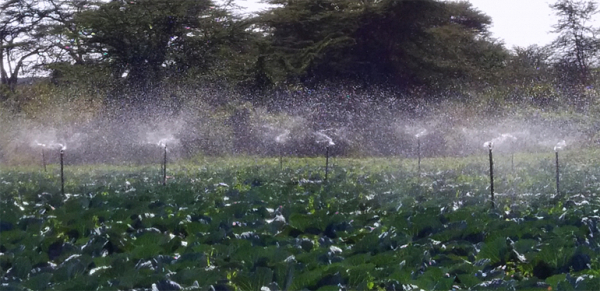
11 June 2018, The Hague: The Netherlands Ministry of Foreign Affairs has granted funding of €39.5 million to implement a 5-year Climate Smart Agriculture programme in Kenya, Tanzania, and Uganda to a consortium led by SNV Netherlands Development Organisation, in partnership with Wageningen University and Research, CGIAR’s Climate Change Agriculture and Food Security Programme, Agriterra, and Rabo Partnerships.
This initiative will significantly contribute to The Netherlands’ international commitments on climate change.
Objective
Climate change threatens crop yields in Africa, and harvest losses may add up to 20 fold the investment costs of adapting agricultural practices now. The programme aims to increase food production and food security by enhancing climate resilience throughout the supply chain. By 2022 this will result in adaptive productive capacity and increased incomes for 300,000 medium-sized and smallholder producers. On top of that, we will improve the business performance of 50 small-medium enterprises and 30 cooperatives to mitigate the risks of climate change on their supply chains.
“This grant will help us scale up our support to farmer communities to feed their families and increase their income. This will require adapting the way they farm to more frequent drought and other climate-related changes” said Meike van Ginneken, CEO of SNV.
Scaling to systemic change
The programme uses a three-pronged approach. We will implement complementary interventions to increase the adoption of climate-smart practices and technologies among farmers and SMEs. We will stimulate their growth throughout the value chain by enhancing private sector investments in climate adaptation. And we will advocate with partners and the government of the three targeted countries to encourage a favorable enabling environment for large-scale market adoption. We collaborate with private and financial sector partners such as Rabobank – who will pave the way for financially viable Climate Smart Agriculture solutions and investment to agribusinesses. Dutch expertise in sustainable food production systems, particularly in potatoes, oilseeds, and pulses will be mobilized.
The programme activities will be in line with existing government strategies like the National Climate Plans and collaborate with multilateral climate investments and the Embassy of the Netherlands in all three countries.
The page you requested could not be found. Try refining your search, or use the navigation above to locate the post.