No Results Found
The page you requested could not be found. Try refining your search, or use the navigation above to locate the post.

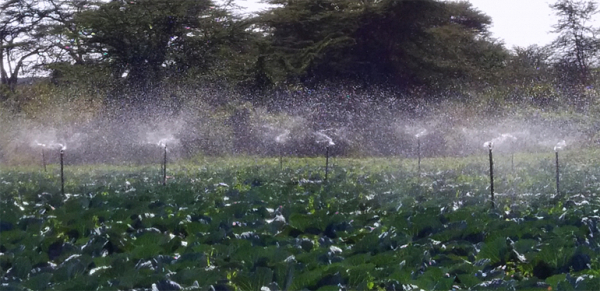
11 June 2018, The Hague: The Netherlands Ministry of Foreign Affairs has granted funding of €39.5 million to implement a 5-year Climate Smart Agriculture programme in Kenya, Tanzania, and Uganda to a consortium led by SNV Netherlands Development Organisation, in partnership with Wageningen University and Research, CGIAR’s Climate Change Agriculture and Food Security Programme, Agriterra, and Rabo Partnerships.
This initiative will significantly contribute to The Netherlands’ international commitments on climate change.
Objective
Climate change threatens crop yields in Africa, and harvest losses may add up to 20 fold the investment costs of adapting agricultural practices now. The programme aims to increase food production and food security by enhancing climate resilience throughout the supply chain. By 2022 this will result in adaptive productive capacity and increased incomes for 300,000 medium-sized and smallholder producers. On top of that, we will improve the business performance of 50 small-medium enterprises and 30 cooperatives to mitigate the risks of climate change on their supply chains.
“This grant will help us scale up our support to farmer communities to feed their families and increase their income. This will require adapting the way they farm to more frequent drought and other climate-related changes” said Meike van Ginneken, CEO of SNV.
Scaling to systemic change
The programme uses a three-pronged approach. We will implement complementary interventions to increase the adoption of climate-smart practices and technologies among farmers and SMEs. We will stimulate their growth throughout the value chain by enhancing private sector investments in climate adaptation. And we will advocate with partners and the government of the three targeted countries to encourage a favorable enabling environment for large-scale market adoption. We collaborate with private and financial sector partners such as Rabobank – who will pave the way for financially viable Climate Smart Agriculture solutions and investment to agribusinesses. Dutch expertise in sustainable food production systems, particularly in potatoes, oilseeds, and pulses will be mobilized.
The programme activities will be in line with existing government strategies like the National Climate Plans and collaborate with multilateral climate investments and the Embassy of the Netherlands in all three countries.
The page you requested could not be found. Try refining your search, or use the navigation above to locate the post.

Women selling vegetables at Jubilee market in Kisumu
Agriculture and food-related activities are important in Nyalenda and Obunga informal settlements in Kisumu county. Almost a third of the population is involved in farming activities. The crops mainly grown are those providing constant income, such as kales and maize. The two most important factors that shape food consumption in the settlements is availability and affordability. Lifestyle, culture and introduced customs play a role as well. The most common plate in Kisumu is made of ugali and vegetables, mostly kales. Meat is rarely consumed, but due to their preferences and culture, people eat fish.

The East Africa digital farmer conference and exhibition kicks off at KALRO grounds Nairobi.
The first edition of the East Africa digital farmers conference and exhibition 2018 has officially kicked off at KALRO grounds, Loresho, Nairobi. The three-day event goes under the theme ‘enabling agribusiness and food security through ICT’. The event will cover several topics namely enhancing crop and livestock productivity, market linkages through ICT, improved awareness, and information dissemination, strengthened policy and regulation, research development and capacity building efforts for enhanced application of ICT in agriculture.
The regional conference seeks to bring together end users, service providers, disseminators, regulators, policy formulators, and technology developers of ICT solutions in the agricultural sector to foster growth in agribusiness and food security for the region.
Speaking at the opening of the conference and exhibition, Agriculture Research PS. Hon. Prof. Hamadi Boga says, “With this kind of conference we are sure that our farmers shall not perish for lack of knowledge. We have invested in heavy technology and are open to different innovations in agriculture.”
ICT plays a key role in improving smallholder farmers in agricultural productivity. Also, through improved ICT processes, e-agriculture can be used to boost agricultural and rural development. E –agriculture is one of the action lines identified in the Declaration and Plan of Action of the World Summit on the Information Society (WSIS), as a key driver in ensuring systematic use of ICT in agriculture in order to provide access to a comprehensive, up to date and detailed information, particularly in rural areas. (Ref: http://www.itu.int/net/wsis/index.html, 2017)
Smallholder farmers are faced with lots of challenges as they try to reach their produce to the market. These challenges comprise of access to markets, inadequate infrastructure, low capacity to innovate, adverse effects of climate change, plant pests and diseases, poor seed, informal marketing structures and poor market access, weak multisector linkages, weak policy, failed extension services, and lack of timely dissemination avenues for agricultural information, among others. (Source, East Africa digital farmer)
These issues can be addressed through the use of ICT to enable smallholder farmers to get maximum optimum results from their produce
Lastly, the World Bank has piloted big data to enable smallholder farmers to get optimum results from their products and avoid losses.
The conference is hosted by the Smart Farmer Magazine in partnership with KALRO.
Written by Hannington Odame and Dawit Alemu
Innovation capacity presupposes capacity to harness science, technology, and innovation (STI) for agricultural commercialization. Agricultural commercialization requires an enabling policy environment on STI issues such as the impact of climate change, nutrition, improved seed and inputs, emerging technologies, infrastructure, research and extension, and financing. These issues are consistent with the Science, Technology, and Innovation Strategy for Africa (STISA) 2024 (African Union Commission undated). This paper uses three STI revolution storylines (case studies on rice, information and communications technology (ICT) and cocoa) to highlight the enabling factors that make STI a vehicle for agricultural commercialization.

The Center for African Bio-Entrepreneurship (CABE) was recently selected to offer technical advisory services to evaluate the Young African Leaders Initiative (YALI) cohort 23 participants in pushing forward the apprenticeship policy framework on youth employment creation in agriculture and agro processing. This collaboration developed as part of the project that CABE is hosting on Utafiti Sera project in conjunction with Partnership for African Social and Governance Research (PASGR) on youth employment creation in agriculture and agro processing.

CABE Executive Director, Dr. Hannigton Odame gives his opening remarks during the county policy dialogue forum in Trans Nzoia County
The Centre for African Bio-Entrepreneurship (CABE) in collaboration with Partnership for Social and Governance Research (PASGR) will hold a one day county forum on ‘Youth Employment Creation in Agriculture and Agro-Processing in Kenya and the role of Utafiti Sera (research-policy community)’ on March 1, 2018 at Westside Hotel in Kitale, Trans Nzoia County. The forum aims to share lessons and form consensus on policy actions to enable counties serve as centers of development in supporting the relevant youth agenda.

A farmer waters vegetables in a farm. Equity Group commits Kshs20bn for to medium sized farmers
Equity Group Foundation through its Agriculture Entrepreneurship Accelerator Programme is committing Ksh20 billion in the next five years in a plan to transform farming into commercial ventures through loans to medium-sized farmers. The funding seeks to benefit farmers with 10-100 acres to turn farming into serious commercial enterprises in order to enhance food security and bridge the annual deficit.

Linking smallholders to markets: pilot study on developing value chains for conserving local biodiversity and improving diets
Katamakisi Kadumutu, a women group from Okatekok, a village in Teso-South Sub County, Busia County was one of the identified entrepreneurial farmer group for production and marketing of the African Leafy Vegetables (ALVs). The group consists of 24 members (20 women, 4 men).

Makueni Governor Kivutha Kibwana tastes Makueni Milk after commissioning the dairy plant
Makueni County has commissioned a dairy plant, Kikima Dairy Farmers Cooperative Society, which will have a capacity to process and back 300 litres and 6,600 litres in a day.
The brand dubbed Makueni Fresh milk becomes the first dairy product to be processed in the county after Governor Kivutha Kibwana opened the Sh25 million plant in Mbooni sub-County.
Makueni produces 18 million litres of milk annually against a demand of 340 million litres which guarantees market for Makueni Fresh. Meanwhile mango farmers in the county will now enjoy the fruits of their labour after the governor opened a fruit processing plant to process season’s mango harvest.
The processing plant will curb 40 percent of post-harvest fruit waste that farmers used to grapple with in the past by making and preserving mango puree.

Fish ponds in Mungoye Village, Vihiga
A national aquaculture curriculum has been launched to promote, boost and sustain farming of tilapia in fish ponds within the catchment areas of L Victoria, and outspreading countrywide.
The modular curriculum which will be offered in various vocational training institutions, polytechnics and colleges throughout the country, is part of joint efforts to sustain the declining fish population in L Victoria, enhance sustainable ways to protect the lake’s environment and eradicate poverty by creating alternate livelihoods other than lake fishing.
The curriculum which is part of the Trilateral Tilapia Cooperation, is a combined product Kenya’s Ministry of Agriculture, Livestock and Fisheries, the German Development Cooperation Agency, through Deutsche Gesellschaft für Internationale Zusammenarbeit GmbH (GIZ) and Israeli Foreign Affairs Ministry’s Agency for International Development Cooperation (MASHAV).
It is also backed by the Comprehensive African Agriculture Development Programme (CAADP) seeks to promote competency based hands-on training (CBET) to enable fish farmers fully benefit from it.
The first phase focused on 10 counties in the Western Kenya region, with the second phase focusing on up-scaled lessons learnt from phase one, and implemented in Kakamega, Bungoma and Siaya Counties.
Agriculture being the backbone of Kenya’s economy contributes 24 per cent of the countries annual GDP, fisheries contribute 7.4 percent of this hence the need for harnessing the fisheries resources.
Source: Daily Nation (http://www.nation.co.ke/business/seedsofgold/Aquaculture-curriculum-launched-to-boost-fish-farming/2301238-4223392-wa0emhz/index.html)
Join our mailing list to receive the latest news and updates from our team.